
How Kids Can Improve Handwriting: 10 Easy Tips for Parents
Good handwriting is an essential skill that helps children present their schoolwork neatly, write comfortably, and express their ideas with confidence.
However, many children struggle with uneven letters, poor spacing, inconsistent letter sizes, or untidy writing. The good news is that children can improve their handwriting with the right techniques, regular practice, and a little encouragement from parents.
✍️ At Likhawat World, we believe every child can develop neat, beautiful handwriting through step-by-step learning, correct biomechanics, and consistent practice.
In this guide, you will discover 10 simple and effective ways to help kids improve their handwriting at home.
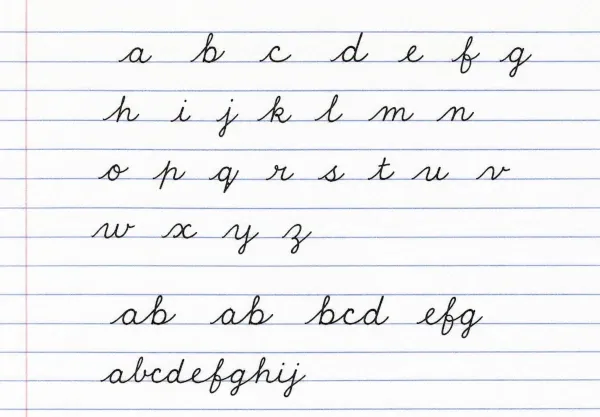
1. Start with Correct Letter Formation
The first step toward better handwriting is learning how to form each letter correctly. Children should understand where to start a letter, which direction to move the pencil, and how to complete the shape. Encourage them to focus on accuracy rather than speed.
💡 Tips for Parents:
- Begin with simple letters and basic strokes.
- Practice similar-looking letters together.
- Use dotted-letter tracing sheets for beginners.
- Encourage children to write independently after tracing.
2. Teach Children the Correct Pencil Grip
A comfortable pencil grip helps children control their writing movements. Holding a pencil too tightly may cause discomfort, fatigue, and make writing significantly more difficult.
Teach your child to hold the pencil comfortably between the thumb and index finger, gently supported by the middle finger (the dynamic tripod grip).
📌 Remember:
- Keep the grip relaxed.
- Avoid squeezing the pencil too tightly ("white-knuckle grip").
- Choose a pencil that is comfortable for your child's hand.
- Allow short breaks if the hand becomes tired.
The goal is comfortable, controlled writing—not a rigid grip that looks identical for every single child.
3. Use Four-Line Handwriting Practice Sheets
Four-line practice sheets are especially helpful when children are learning letter formation and consistent letter sizes. The lines guide children to understand where letters start and finish, how tall different letters should be, and how to keep their baseline aligned.
Encourage your child to practise:
- Small letters: such as a, c, e, and o (middle zone).
- Tall letters (Ascenders): such as b, d, h, and l.
- Tailed letters (Descenders): such as g, j, p, and y.
- Word alignment: words with consistent letter height and spacing.
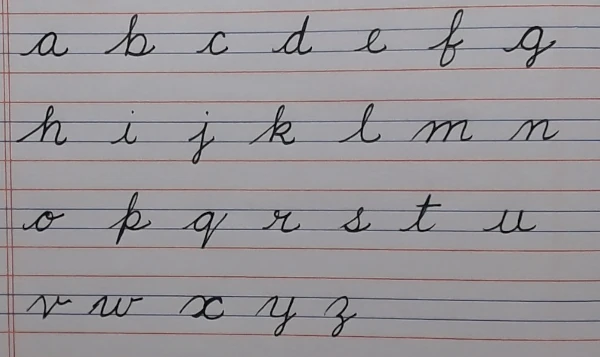
Start with guided four-line practice and gradually transition to ordinary single-ruled notebooks as your child gains confidence.
4. Practise Handwriting for 10–15 Minutes Every Day
Regular short bursts of practice are far more effective than occasional, lengthy writing sessions that lead to burnout. Create a simple daily routine tailored to your child's age and attention span.
⏱️ Suggested Daily Handwriting Routine (15 Mins)
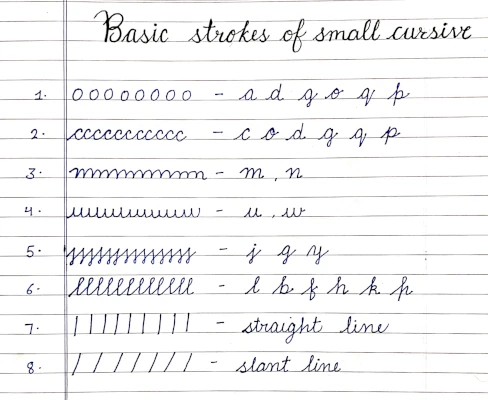
Keep practice enjoyable by using engaging vocabulary, short sentences, and small achievable goals.
5. Help Children Improve Letter Size and Spacing
Uneven letter heights and crowded words make writing difficult to decipher. Teach children to leave an even space between words (roughly the width of the letter 'o') and maintain a consistent height for similar letters.
Letters of different heights, words crowded together without gaps, and uneven alignment above or below lines.
Consistent letter sizes, uniform word spacing, and text resting firmly on the baseline.
The 3-Point Check: Ask your child to review three things after completing each line: letter size, word spacing, and baseline alignment.
6. Introduce Cursive Writing Step by Step
Once children are comfortable forming individual letters, they can begin learning cursive penmanship. Cursive involves continuous flowing strokes and smooth connections between letters, preventing hand fatigue and increasing writing speed.
Follow this proven progression:
- Learn foundational cursive strokes (underturn, overturn, loops).
- Practise small cursive letters a–z in logical stroke groups.
- Learn capital cursive letters A–Z.
- Practise joining two or more letters smoothly.
- Move on to full words, sentences, and paragraphs.
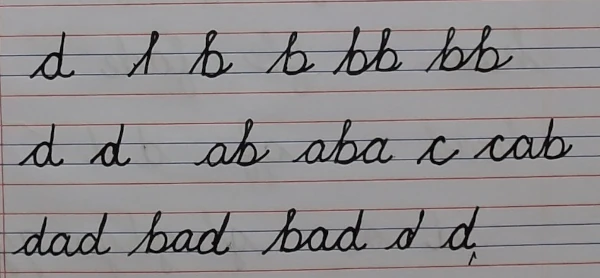
Want to Learn Cursive Writing Step by Step?
At Likhawat World, children learn letter formation, capitals, joins, and sentence flow through structured video lessons and downloadable practice sheets.
Explore the Complete Cursive Course on Udemy →7. Encourage Children to Write Words and Sentences
After practising individual letters, help children apply their skills to meaningful writing. Begin with familiar vocabulary words and gradually introduce short sentences.
Word Practice:
Sentence Practice:
- I love to learn new things.
- Practice makes handwriting better.
- Every day is a new opportunity to learn.
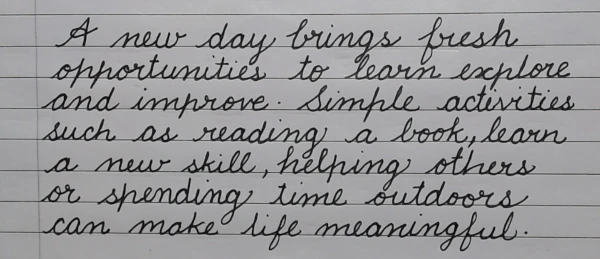
Choose sentences that match your child's reading and writing level. Always praise neatness, effort, and improvement rather than expecting immediate perfection.
8. Teach Proper Writing Posture and Notebook Position
Children need an ergonomic writing setup to practise comfortably and prevent physical strain during homework or exams.
Ergonomic Checklist:
- Sit upright: Back comfortably supported against the chair and feet flat on the floor.
- Tilt the notebook: Angle paper 30° to 45° (counter-clockwise for right-handers, clockwise for left-handers).
- Rest writing arm: Forearm supported on the desk surface without tensing the shoulder.
- Support hand: Non-writing hand resting on the paper to keep it steady.
- Lighting: Ensure ample natural or desk lighting that doesn't cast a shadow over their writing line.
9. Make Handwriting Practice Fun
Handwriting practice should never feel like a tedious punishment or extra chore. Integrate playful activities that keep your child engaged:
- Write their favourite animal, superhero, or book character name neatly.
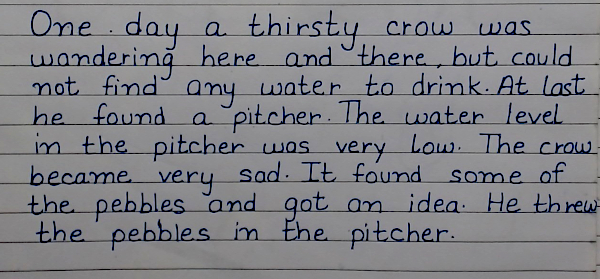
- Copy a favourite short nursery poem or funny story excerpt.
- Write a daily 1-sentence gratitude note for the family fridge.
- Create a colourful decorative quote page with gel pens.
- Compare today's writing page with last week's sample to spot improvements.
- Complete a weekly handwriting worksheet speed-and-neatness challenge.
Follow Likhawat World for Daily Handwriting Tips
Looking for more cursive letter demonstrations, ruled sheet exercises, and video tutorials? Join our learning community:
10. Celebrate Progress Instead of Expecting Perfection
Every child learns fine-motor skills at their own pace. Some children develop control within two weeks, while others take several months to stabilize their letter sizing and slant.
Keep their previous practice sheets in a folder so your child can physically see how much their writing has improved over time. Instead of pointing out every small flaw, praise specific mechanical gains:
- “Your letters are so much more consistent in height today!”
- “You left such neat, readable spaces between your words.”
- “Your writing stayed perfectly aligned on the line this time.”
Note: If handwriting remains unusually painful, fatiguing, or difficult despite persistent gentle practice, consider consulting your child's school teacher or an occupational therapist.
⚠️ Common Handwriting Mistakes Parents Should Watch For
- Writing too quickly before mastering correct letter formation.
- Holding the pencil too tightly with stiff, locked fingers.
- Using inconsistent letter sizes within the same sentence.
- Leaving too little or excessively wide space between words.
- Ignoring baseline alignment and letting words float.
- Practising for too long without adequate breaks.
- Comparing your child's handwriting speed to other classmates.
👉 Focus on correcting just one habit at a time to prevent frustration.
How Long Does It Take for Kids to Improve Handwriting?
There is no rigid timeline. Progress depends on age, starting hand-strength, comfort with the pencil, and practice consistency. With regular 15-minute daily practice, most children show noticeable improvements in neatness and spacing within 3 to 4 weeks. The most critical ingredients are patience, constructive feedback, and a sustainable daily routine.
Final Thoughts
Helping children improve handwriting is about far more than just making letters look neat—it builds self-esteem, comfortable study habits, and the ability to express ideas clearly and effortlessly in examinations.
Start with correct letter formation, utilize four-line ruled sheets, maintain short daily practice sessions, and celebrate every milestone. At Likhawat World, our mission is to make handwriting simple, structured, and enjoyable for every learner.
Ready to Help Your Child Develop Better Handwriting?
Explore Likhawat World’s guided courses, 1-on-1 diagnostic sessions, and structured practice materials to help your child write neatly and with lifelong confidence.
Learn better. Write better. Shine better.

Mrs. Jyoti Agrawal
With over 15+ years of specialized teaching experience, Mrs. Jyoti Agrawal has guided thousands of children across India in English Cursive, Hindi Devanagari handwriting, and Speed Writing mechanics.