How to Improve Cursive Writing: A Complete Beginner’s Guide
Introduction
Cursive writing is more than just beautiful handwriting. It helps improve writing speed, enhances fine motor skills, develops better hand-eye coordination, and gives written work a neat and professional appearance.Many students and adults struggle with messy handwriting because they have not learned the correct techniques of cursive writing. The good news is that with regular practice and proper guidance, anyone can improve their cursive handwriting.In this guide, we will explore practical tips and exercises to help you develop smooth, neat, and elegant cursive writing.Type your paragraph here
What is Cursive Writing?
Cursive writing is a style of handwriting where letters are connected in a flowing manner. Unlike print writing, cursive allows words to be written more quickly and smoothly.
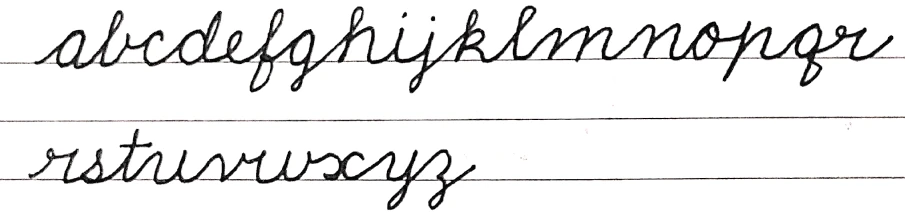
Benefits of cursive writing include:
- Improved writing speed
- Better letter formation
- Enhanced concentration
- Improved fine motor skills
- More attractive handwriting
Why Do People Struggle with Cursive Writing?
Common reasons include:
- Incorrect pencil or pen grip
- Poor sitting posture
- Lack of regular practice
- Improper letter formation
- Writing too fast without focusing on accuracy
Identifying these issues is the first step toward improvement.
1. Maintain the Correct Writing Posture
Good handwriting begins with proper posture.
Follow these guidelines:
- Sit upright with your back straight.
- Keep both feet flat on the floor.
- Rest your forearm comfortably on the table.
- Keep the notebook slightly tilted.
A comfortable posture reduces hand fatigue and improves control over your writing.
2. Hold Your Pen Correctly
A proper grip provides better control and smoother strokes.
Tips:
- Hold the pen between the thumb and index finger.
- Support it with the middle finger.
- Avoid gripping too tightly.
- Keep your hand relaxed.
A relaxed grip allows your hand to move freely while writing.
3. Learn Letter Formation First
Before writing words and sentences, master individual letters.
Practice:
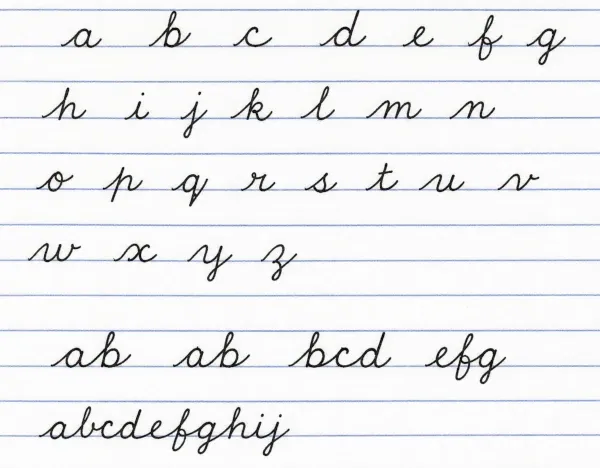
- Small cursive letters a-z
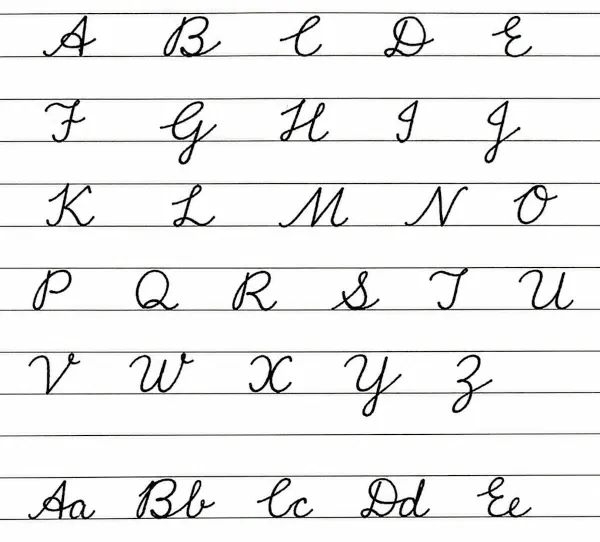
- Capital cursive letters A-Z
- Basic entry and exit strokes
Focus on consistency rather than speed.
4. Practice Connecting Letters
The beauty of cursive writing lies in smooth letter connections.
Examples:
Start with simple combinations and gradually move to complete words.
5. Use Four-Line Practice Sheets
Four-line sheets help maintain:
- Proper letter height
- Consistent spacing
- Correct slant
- Uniform size
Beginners should always practice on four-line sheets before switching to plain paper.
6. Slow Down Your Writing
One of the biggest mistakes learners make is trying to write fast too early.
Instead:
- Focus on neatness.
- Form each letter carefully.
- Maintain equal spacing.
Speed naturally improves with regular practice.
7. Practice Daily
Consistency is the key to improvement.
Suggested Daily Routine
- 5 minutes: Warm-up strokes
- 10 minutes: Letter practice
- 10 minutes: Word practice
- 5 minutes: Sentence writing
Just 30 minutes a day can produce noticeable improvements within a few weeks.
8. Focus on Uniform Slant
Good cursive writing maintains a consistent slant throughout the page.
Tips:
- Keep all letters leaning at a similar angle.
- Use ruled sheets initially.
- Avoid mixing upright and slanted letters.
Uniform slant creates a professional and elegant appearance.
9. Improve Spacing Between Words
Many handwriting problems occur because of uneven spacing.
Maintain:
- Equal spacing between letters
- Clear spacing between words
- Consistent margins
Good spacing improves readability significantly.
10. Write Meaningful Sentences
After practicing letters and words, move to sentence writing.
Examples:
- Practice makes perfect.
- Neat handwriting builds confidence.
- Learning cursive writing is fun.
Writing meaningful content improves fluency and confidence.
Common Mistakes to Avoid
Avoid these common errors:
- Holding the pen too tightly
- Writing too fast
- Ignoring posture
- Inconsistent letter size
- Uneven spacing
- Skipping daily practice
Correcting these mistakes can dramatically improve handwriting quality.
Best Materials for Cursive Practice
Recommended tools:
- Four-line notebooks
- Smooth-writing gel pens
- Handwriting practice worksheets
- Cursive writing books
Using the right materials makes practice more enjoyable and effective.
How Long Does It Take to Improve Cursive Writing?
Most learners notice visible improvement within 30 to 60 days when practicing consistently.
Remember:
- Focus on quality first.
- Practice daily.
- Track your progress.
- Stay patient.
Handwriting improvement is a gradual process, but the results are rewarding.
Final Thoughts
Beautiful cursive writing is a skill that can be learned by anyone. With proper posture, correct pen grip, regular practice, and patience, you can transform your handwriting into a neat and elegant style.
Start with small daily practice sessions, focus on consistency, and celebrate your progress along the way.
At Likhawat World, we believe that better handwriting leads to better confidence, better learning, and better self-expression.
Happy Writing!